This breakdown is written for water utility operators, municipal engineers, and pipeline contractors who need more than the terminology. You already know what "tapping" means in general. What matters on the job site is which method fits a given pipe, how the fitting gets mounted, and what controls a clean cut under pressure.
The word "tapping" gets used loosely across the industry, sometimes referring to the whole operation, sometimes just to the drilling step. This article breaks down the exact methods, equipment, and step-by-step sequence involved, so there's no ambiguity when a crew is standing next to a pressurized main waiting on instructions.
Key Takeaways
- Water main tapping adds a branch using direct, saddle, sleeve, or hot tap methods matched to pipe conditions
- Hot/wet tapping keeps the main pressurized and in service for the full job
- The process follows a fixed sequence: prep, mount, cut, insert, and pressure-test
- Pipe material, diameter, and equipment condition decide the method and whether the tap holds
- Mismatched or worn tapping equipment is the most common cause of failed taps
What Is Water Main Tapping?
Water main tapping is the controlled drilling or cutting of a branch connection into an existing main. Crews use it to add a service line, insert a valve, or open a new distribution point without disturbing the rest of the network.
The goal is straightforward: a leak-tight, pressure-rated connection installed with little to no disruption downstream. Trenton Water's utility documentation describes hot tapping specifically as tying into a system that stays pressurized and operating throughout the work, with no draining and no service interruption.
Tapping vs. Line Stopping
These two terms get confused constantly, but they solve different problems:
- Tapping creates a brand-new opening into a live main for a service connection, valve, or branch line
- Line stopping temporarily isolates flow in an existing section of pipe, usually so a repair or replacement can happen without draining the entire system
In practice, line stopping often uses a tap-created opening as its starting point. The tap itself is the connection; the line stop is the flow-control step built on top of it. Confusing the two leads to equipment mismatches on the job, such as ordering line stop hardware when a tapping sleeve is what you need.
Common Water Main Tapping Methods
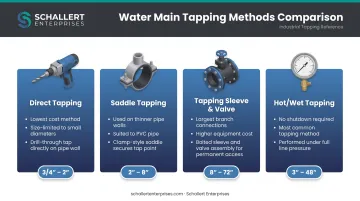
Direct Tapping
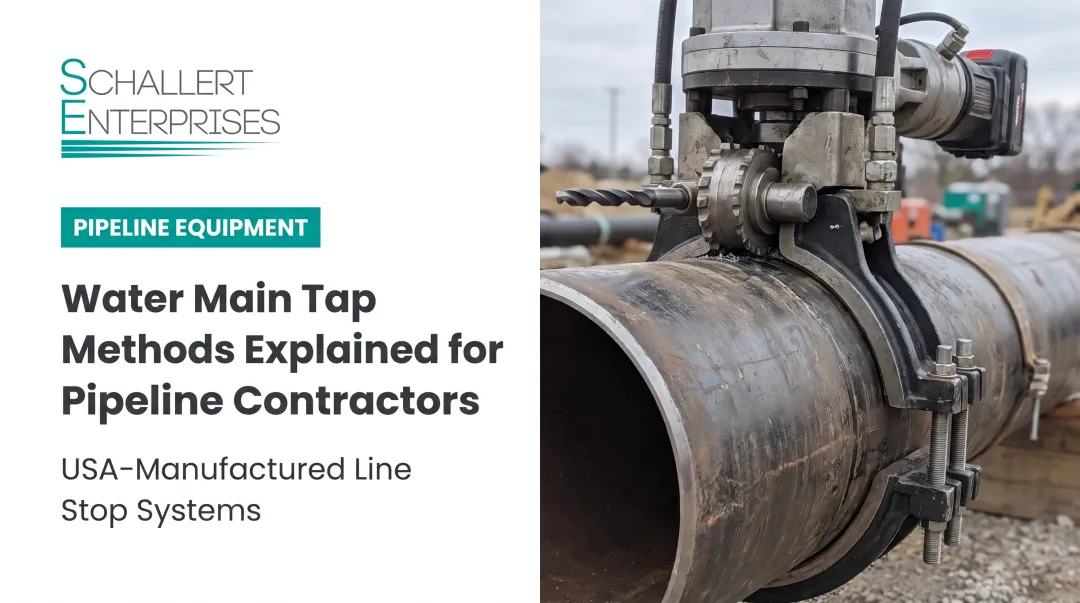
A hole is drilled and threaded directly into the pipe wall in a single motion, then a corporation stop is inserted into the threaded opening. It's typically the fastest and lowest-cost tapping method available.
Direct tapping is also the most limited. Local utility codes cap it tightly by pipe material and diameter.
Boone, North Carolina, for instance, permits direct taps into ductile iron only at 1 inch or smaller, requiring a saddle or sleeve above that. Many utilities prohibit direct tapping into PVC mains entirely, since the pipe wall can't reliably hold threads without support.
Saddle Tapping
A saddle tap clamps a metal saddle around the pipe first, and the corporation stop threads into the saddle rather than the pipe wall itself. This spreads the load and avoids weakening the main directly.
Saddle tapping suits situations where direct threading risks damage:
- Thinner-walled pipe sections
- PVC mains, where many utilities require a saddle instead of allowing direct tapping
- Iron mains at mid-range diameters — St. Paul standards require saddles for 1.5- and 2-inch iron taps
Tapping Sleeve and Valve
A tapping sleeve bolts around the main in two halves, with a valve mounted on top of the sleeve. This setup allows larger branch connections than direct or saddle taps can support, and it distributes stress across more of the pipe wall.
The trade-off is cost and installation time. Sleeves require more material, more bolting, and more labor to set correctly. In exchange, they offer greater stability for larger-diameter or higher-pressure taps, which is why many utility standards require sleeves above 2 inches on iron mains and for any tap on plastic pipe.
Hot Tapping (Wet Tapping)
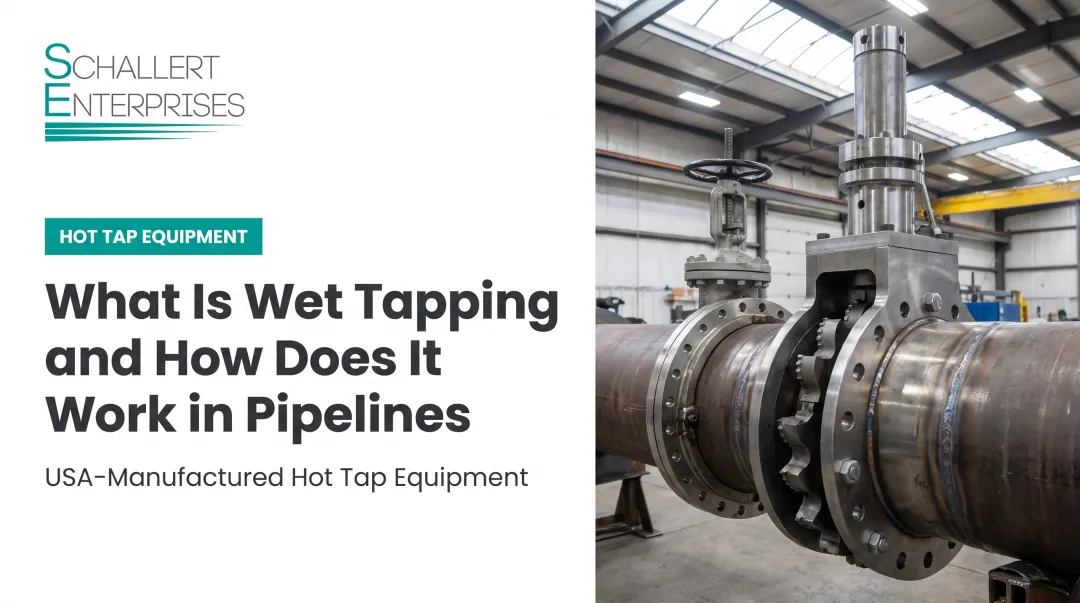
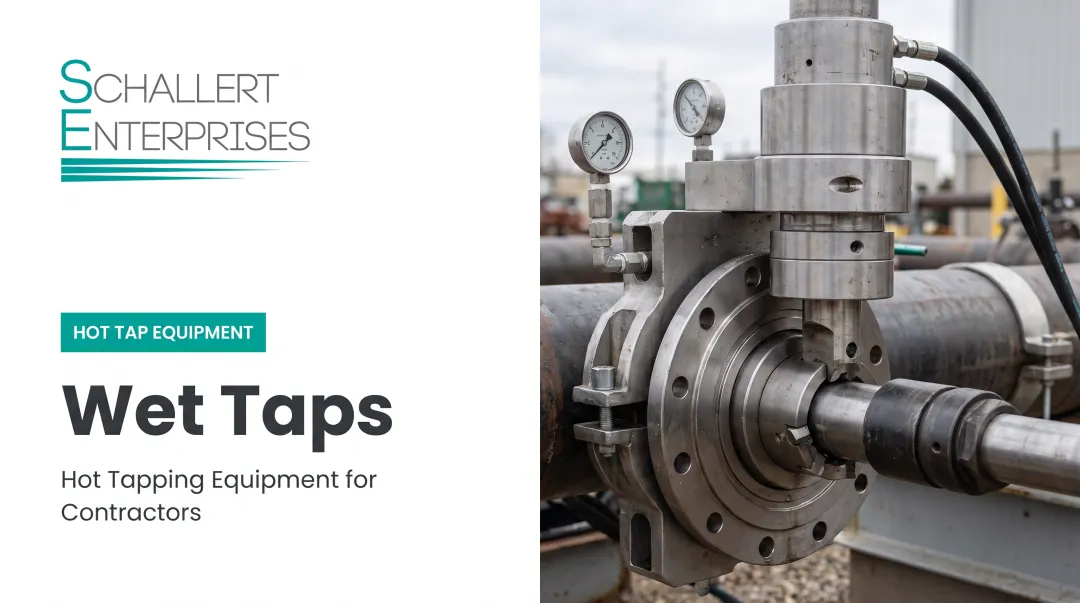
Hot tapping cuts into the main while it stays fully pressurized and in service. A tapping machine bolts onto the mounted fitting, and the cutting happens without draining a single gallon or shutting a valve upstream.
This is the method most utilities default to. It eliminates water loss, cuts contamination exposure from an open depressurized line, and avoids customer downtime.
That only works with equipment built to hold pressure through the entire cut. USA-made tapping machines and cutters from Schallert Enterprises make hot taps safe and repeatable under live pressure.
How the Water Main Tapping Process Works (Step-by-Step)
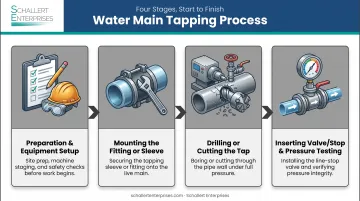
The process moves through four stages: mounting the fitting on the main, cutting through the pipe wall under pressure, inserting and sealing the valve or stop, and pressure-testing the finished connection. Skip or rush one, and the seal, coupon retention, or final test usually fails.
Equipment for the job includes:
- A matched fitting (saddle, sleeve, or direct-tap body)
- A gasket set rated for the main's pressure
- A tapping machine sized to the job
- A cutter and pilot drill matched to pipe diameter and material
- Disinfection materials for the exposed pipe surface
Once cutting starts, the machine and fitting hold line pressure while the crew controls feed rate, torque, and alignment. Push too fast or run a dull cutter and you risk binding, a lost coupon, or tool damage.
Step 1: Preparation and Equipment Setup
Crews confirm the pipe's material, diameter, and pressure rating first. From there, they select a matched fitting, gasket set, and tapping machine or saddle, then clean and disinfect the section of main before anything gets mounted. Skipping this step is how mismatched equipment ends up bolted to a pipe it was never built for.
Step 2: Mounting the Fitting or Sleeve
Crews bolt and torque the saddle, sleeve, or direct-tap fitting evenly around the main before any cutting starts. The fitting must create a pressure-tight seal on its own—it is what contains pressure once the pipe wall is breached.
Step 3: Drilling or Cutting the Tap
The tapping machine drives the cutter or boring bar through the pipe wall while the main stays pressurized. The cut coupon—the disc of material removed from the wall—must stay retained inside the cutter instead of falling into the line as debris.
This is where cutter and pilot drill design actually matters. A deep tooth profile on the cutter keeps material from building up mid-cut, and catch wires built into the pilot drill hold the coupon in place once it's cut free. Skip either feature and the crew is relying on luck to keep debris out of the main.
Step 4: Inserting the Valve/Stop and Testing
Once the cut finishes, the valve, corporation stop, or completion plug goes in, and the machine withdraws. Crews then pressure-test the connection and check for leaks before backfilling the trench. This step isn't optional or a formality: a clean cut with a bad seal is still a failed tap.
Where Tapping Is Applied, Why It Matters & What Affects the Outcome
Tapping shows up anywhere a live main needs a new branch:
- New residential or commercial service connections
- Subdivision and industrial branch lines
- Valve insertions into existing distribution sections
- Main extensions across water, wastewater, oil and gas, and industrial pipeline systems
Hot/wet tapping dominates most of these scenarios for a clear operational reason. Shutting a main down for a dry tap means draining the line, exposing it to contamination, and cutting off water to every customer downstream until the work finishes. Hot tapping skips all of that.
For any single connection point, tapping is usually a one-time event. But across an entire distribution network, utilities perform it constantly as service areas grow and networks expand.
What actually changes the outcome of a tap:
- Pipe material and wall thickness: ductile iron, PVC, and HDPE each need different tapping approaches and often different equipment
- Operating pressure and main diameter: relative to the maximum tap size the method can support
- Condition and calibration: tapping machine, cutters, and pilot drills must be sound and correctly set up
- Crew training: correct tapping angle and torque procedures
- Regulatory and utility standards: AWWA guidance and local codes on tap size limits and materials
Get any one of these wrong, and the rest of the setup doesn't matter.
Common Issues, Misconceptions & When Tapping May Not Be the Right Choice
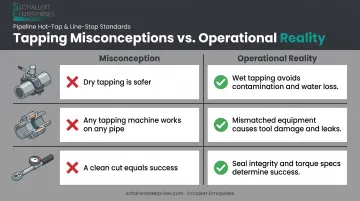
Misconception: dry tapping is safer because the line isn't pressurized. It's actually the opposite in most cases. A depressurized, open pipe is exposed to outside contamination. Draining the section also means real water loss and a service interruption for everyone downstream. Wet tapping avoids both problems.
Misconception: any tapping machine works on any pipe. It doesn't. Mueller's technical guidance points to dull cutters and excessive feed rate as direct causes of over-torque and tool damage during a cut. Mismatched equipment is one of the most common reasons taps fail or leak after installation. Wrong cutter material, wrong machine size, or an adapter that doesn't fit the fitting all put the job at risk.
A clean cut isn't the same as a sealed connection. Boring through the pipe wall cleanly doesn't guarantee a leak-free result if gaskets were skipped or torque specs weren't followed on the fitting. The cut is only half the job.
When tapping isn't the right call:
- The required tap size exceeds what the main can support via direct or saddle methods
- The pipe section is severely corroded or brittle enough that clamping or threading risks a break
- A line stop or pipe-section replacement is clearly safer than forcing the tap
If the main can't support the tap size, the pipe is too far gone, or a line stop is the lower-risk path, stop and change the plan before you cut.
Frequently Asked Questions
What does "water tapping" mean?
Water tapping means creating a new branch connection into an existing main to add a service line or fitting, usually without shutting off water supply to existing customers.
What is a tapping sleeve on a water main?
A tapping sleeve is a bolted sleeve fitted around a water main with a valve mounted on top. It's used for larger or higher-pressure branch connections than direct or saddle taps can support.
Is hot tapping cost effective?
Equipment costs are higher upfront, but hot tapping avoids water loss, service interruption penalties, and contamination remediation. Those avoided costs usually make it cheaper over the life of the connection.
What is the difference between hot tapping and line stopping?
Hot tapping creates a brand-new connection into a live main. Line stopping temporarily isolates flow in an existing pipe section so repairs or replacements can happen without draining the system.
How deep are water mains typically tapped?
Depth depends entirely on the main's burial depth under local code, which varies widely by jurisdiction. Crews confirm exact depth and clearance before mounting any equipment.
Can water main tapping be done without shutting off the water supply?
Yes. Hot tapping (also called wet tapping) is built to finish the connection while the main stays pressurized and in service, so no shutdown is required.