The stakes are real. U.S. and Canadian water systems log roughly 260,000 water-main breaks a year, costing utilities close to $2.6 billion annually in repairs, according to ASCE's 2024 analysis of pipeline infrastructure. Every hour spent isolating a line with the wrong tool adds to that tally.
This article breaks down how balloon/inflatable stops and folding heads differ in pressure rating, pipe size range, cost, and durability, so you can match the right method to your next job before you're standing at the excavation with the wrong equipment on the truck.
Key Takeaways
- Balloon plugs deploy quickly at lower cost on low-pressure, gravity-fed lines
- Folding heads handle pressurized, high-temperature lines for the long haul
- Standard inflatable plugs typically max out between 13-32 psi; folding heads run 150-250 psi
- Higher upfront cost pays off over decades of reuse with proper maintenance, lowering cost-per-use
- Pipe diameter, pressure, fluid type, and reuse frequency ultimately decide which method wins
Balloon Line Stop vs Folding Head: Quick Comparison
Here's the short version before we dig into specifics.
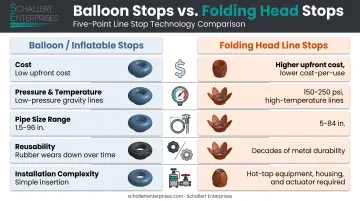
Cost
- Balloon/Inflatable: Lower upfront cost. Makes sense for one-off jobs or short-term isolation work.
- Folding Head: Higher initial investment, but lower cost-per-use across a long service life.
Pressure & Temperature Range
- Balloon/Inflatable: Best for low-pressure or gravity-fed lines like sewer and stormwater systems.
- Folding Head: Built for high-pressure, high-temperature pipelines, including oil, gas, and pressurized water mains.
Pipe Size Range
Manufacturer catalogs vary quite a bit here:
| Product Type | Manufacturer | Diameter Range |
|---|---|---|
| Inflatable plug | Trelleborg PLUGY/PLUGSY | 1.5-72 in. |
| Inflatable plug | Petersen PeteStop | 2-96 in. |
| Folding head | Schallert Enterprises | 5-84 in. |
Reusability & Durability
- Balloon/Inflatable: Rubber bladders wear down from repeated inflation cycles, friction, and chemical exposure.
- Folding Head: Metal components built for decades of repeated use with proper maintenance.
Installation Complexity
- Balloon/Inflatable: Simple insertion through a manhole or access point, minimal specialized gear.
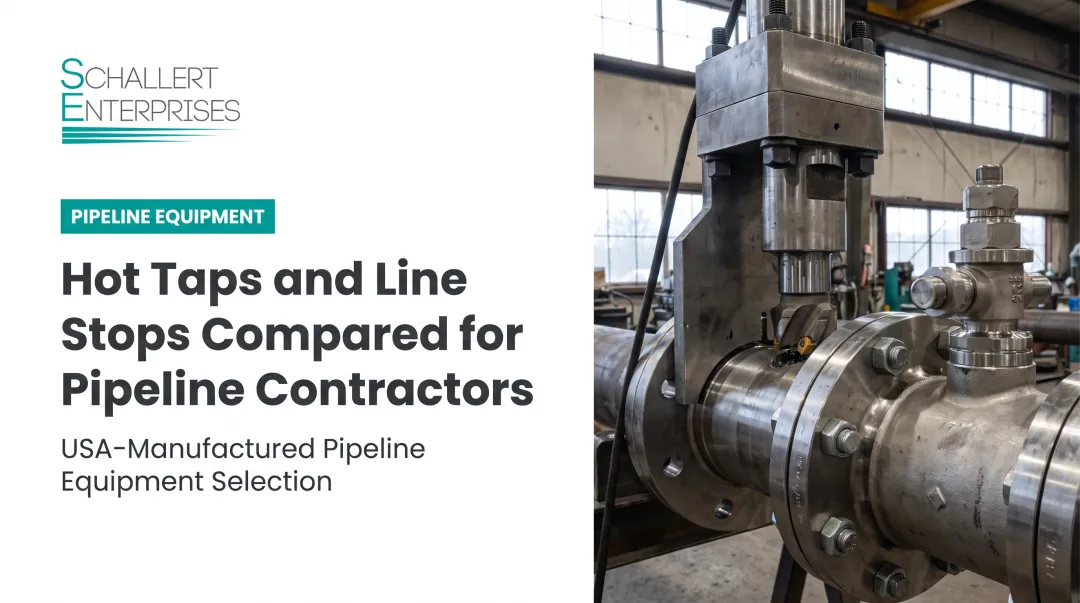
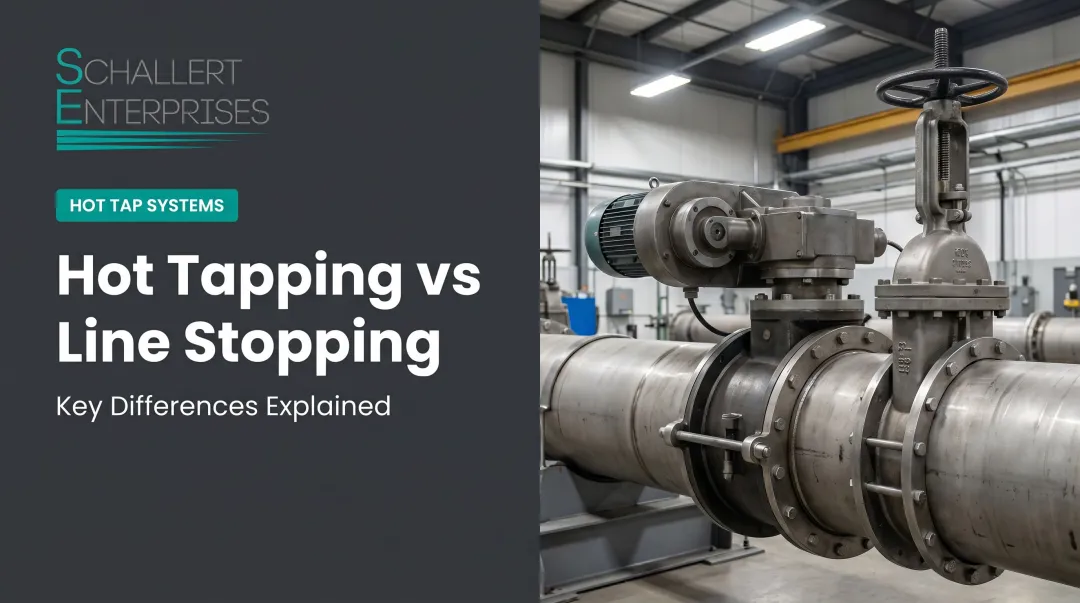
- Folding Head: Requires hot tapping equipment, a housing, an actuator, and a sandwich valve for a complete setup.
What Is a Balloon/Inflatable Line Stop?
A balloon or inflatable line stop is an expandable rubber bladder that gets inserted into a pipe and inflated with air or water to temporarily block flow. Crews often use it for low-pressure maintenance and testing when they need a fast, temporary block rather than a permanent fix.
The appeal comes down to three things:
- Minimal equipment: no housings, actuators, or hydraulics required
- Fast deployment through a manhole or small access cut
- Lower cost on short-duration jobs versus mobilizing heavier gear
Two common subtypes show up on job sites:
- Pipe Plug (PP): standard model with no bypass, used only to block flow
- Pipe Test Plug (PTP): includes a bypass so crews can fill or discharge water while the plug stays inflated
Where Balloon Stops Get Used
These tools dominate municipal wastewater and stormwater work — leak testing, sewer maintenance, and temporary blocking during non-pressurized repairs. If you're not fighting significant back pressure, an inflatable plug usually gets the job done without a big equipment footprint.
A good example: Petersen Products documented a 60-inch lined-concrete gravity sewer in Hollywood, Florida, where a custom plug (17 inches deflated) was inserted through a manhole and inflated to just 12 psi. It stayed in place for five months with no failures, allowing the city to reline the pipe in dry conditions while treatment-cost savings exceeded the plug's price.
That is a strong showing for low-pressure, long-duration isolation. Notice the operating pressure, though: 12 psi is nowhere near what a pressurized main demands.
What Is a Folding Head Line Stop?
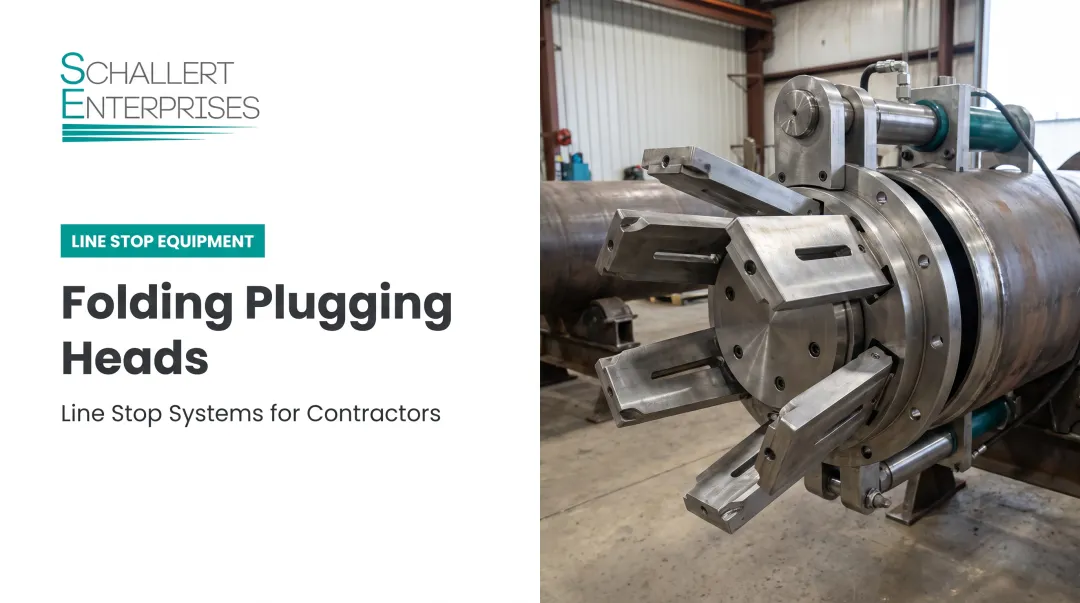
A folding head line stop is a mechanical plate assembly that rotates 90 degrees inside the pipe, driven by a hydraulic actuator, to fully seal the line. Unlike a balloon plug, it's designed to isolate a section of a live, pressurized pipeline without shutting down the rest of the system.
That capability matters most for:
- Hot tapping on active oil, gas, or water lines
- Valve replacement without a full system shutdown
- Section repairs on pipelines that can't tolerate downtime
Schallert Enterprises, a USA-based manufacturer, builds folding heads, pivoting heads, housings, actuators, and completion plug setters custom-fitted to exact pipeline specs, from small taps up to 84-inch diameter lines.
Folding-head pressure ratings in Schallert's lineup range from 150 psi to 250 psi. Polyurethane sealing elements generally cap out at 150 psi, so the seal is the practical pressure limit on most assemblies.
Folding Heads vs. Pivoting Heads
Not every job needs the full-size hardware. Schallert's smaller folding head machines and pivoting heads cut cost on smaller taps, valves, and fittings:
- FH0806: 8-inch line through a 5.875-inch access diameter
- Pivoting heads: 3–12 inch applications with a lighter, more compact actuator
Where Folding Heads Get Used
Oil and gas pipelines, industrial process piping, and large-diameter municipal water mains all lean on folding heads because uninterrupted service isn't optional.
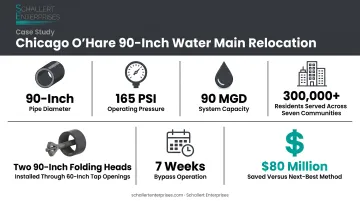
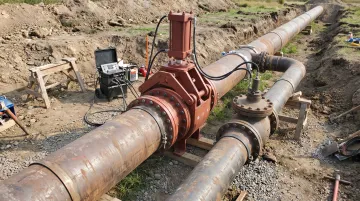
One clear example: relocating a 90-inch high-pressure concrete water main at Chicago O'Hare, carrying up to 90 MGD at 165 psi and serving over 300,000 residents across seven communities. Crews used two 90-inch folding-head line stops through 60-inch tap openings and kept the main in service for seven weeks with a bypass running. The approach reportedly saved roughly $80 million compared to the next-best method.
Balloon vs Folding Head: Which Is Better?
Neither tool wins every job. The right call depends on a handful of factors:
- Line pressure — low psi favors balloons, higher psi demands folding heads
- Temperature — extreme heat pushes rubber bladders past their limits
- Fluid type — corrosive or petroleum-based fluids degrade rubber faster
- Pipe diameter — very large mains often need custom folding-head hardware
- Reuse frequency — one-off job or recurring maintenance program?
- Job duration — days versus months changes the equation
Choose balloon/inflatable stops for low-pressure, short-term, or gravity-fed lines where speed and low cost matter most. Choose folding heads for pressurized, high-temperature, or large-diameter lines where safety and long-term reliability can't be compromised.
Real-World Example
Take a typical scenario from Schallert's project history: a water utility needed to service a valve on an active main and couldn't afford a system-wide shutdown. A standard inflatable plug wasn't rated for the line's operating pressure.
The crew installed a 20-inch folding head paired with a 12-inch bypass valve instead. The folding head was rated for 250 psi—well above the 150 psi limit typical of rubber sealing elements and far beyond what a bladder could hold reliably.
The bypass kept water flowing to customers while the valve work happened downstream, avoiding a disruption that would have affected an entire service zone. Once pressure exceeds what a balloon plug can safely handle, the folding head is the only safe option.
If your next job involves a pressurized main, a valve swap, or a diameter that doesn't fit off-the-shelf gear, reach out to Schallert Enterprises at sales@schallertenterprises.com or (951) 674-6773 for a custom folding head or line stop recommendation.
Conclusion
Neither balloon plugs nor folding heads are universally "better." Balloon and inflatable stops suit low-pressure, short-term jobs where speed and cost matter most. Folding heads handle pressurized, high-durability work where uninterrupted service is non-negotiable.
Cost control, uninterrupted service, and long-term equipment reliability are too important to leave to guesswork. Talk with an experienced line stop equipment manufacturer like Schallert Enterprises before the job starts to match the right tool to your pipeline.
Frequently Asked Questions
What is a line stop in piping?
A line stop is a temporary method of blocking flow in a pressurized or gravity pipeline. It allows maintenance, repair, or modification work without shutting down the entire system.
What is a balloon plug?
A balloon plug is an inflatable rubber bladder inserted into a pipe and expanded with air or water to temporarily seal flow. It's commonly used in low-pressure or gravity-fed lines like sewers.
Are there different types of pipe stoppers?
Yes. Pipe stoppers range from inflatable balloon plugs and mechanical folding heads to pivoting heads. Each is suited to a different pressure range and pipe diameter.
What is a folding head in line stopping?
A folding head is a metal plate assembly that rotates into position inside a pipe via a hydraulic actuator. It seals off flow during hot tapping procedures on pressurized lines.
Is a balloon line stop or folding head cheaper?
Balloon stops usually cost less upfront. Folding heads cost more initially but deliver a lower cost-per-use over time thanks to their reusability and durability across repeat jobs.
Can balloon line stops handle high-pressure pipelines?
Generally, no. Balloon/inflatable stops are limited to low-pressure or non-pressurized lines. High-pressure pipelines require mechanical folding head systems rated for the application.