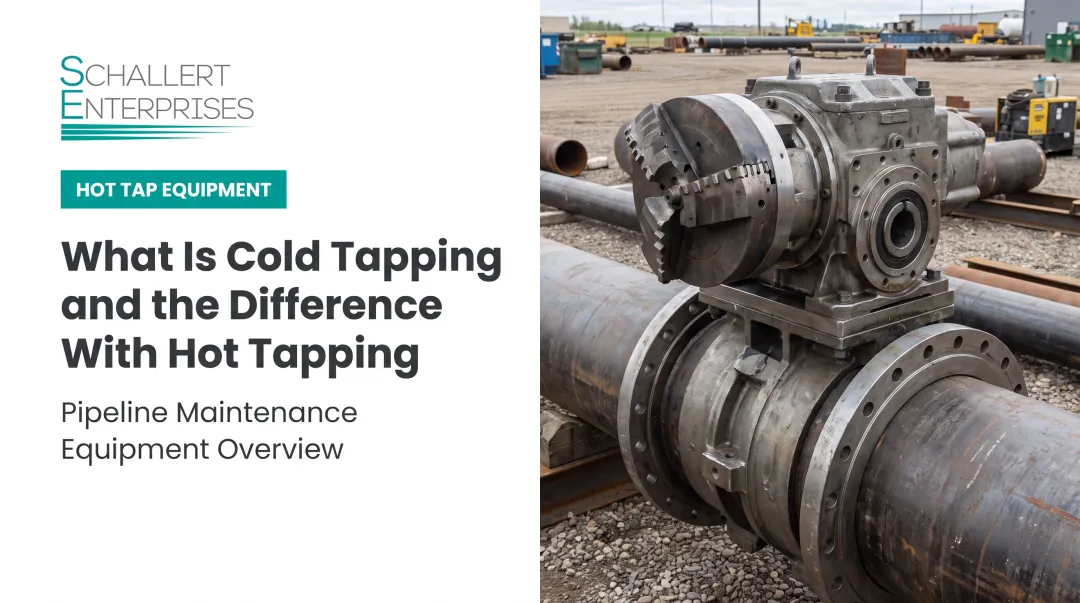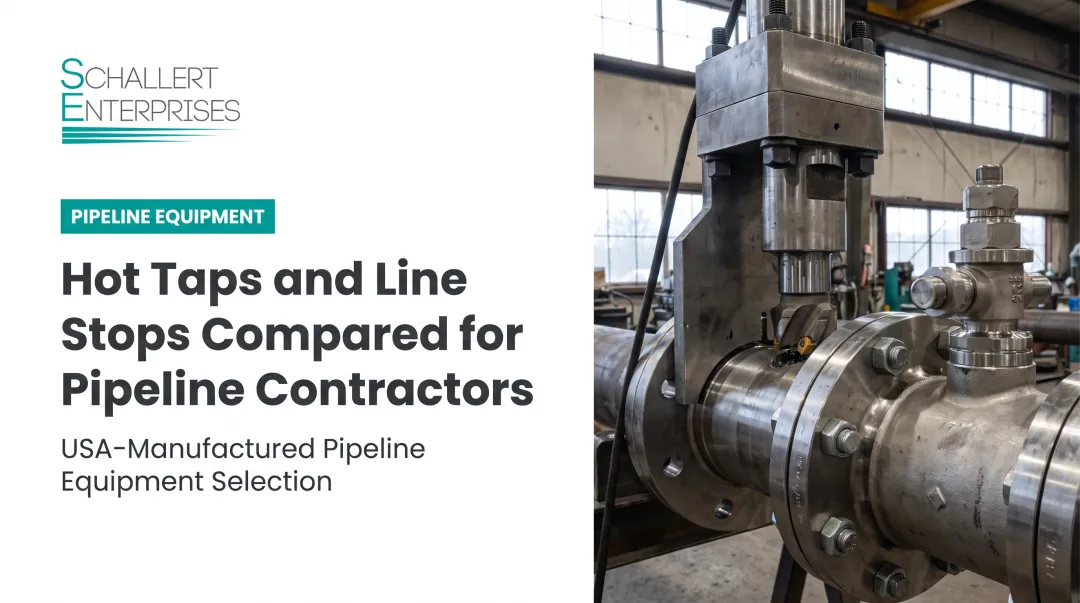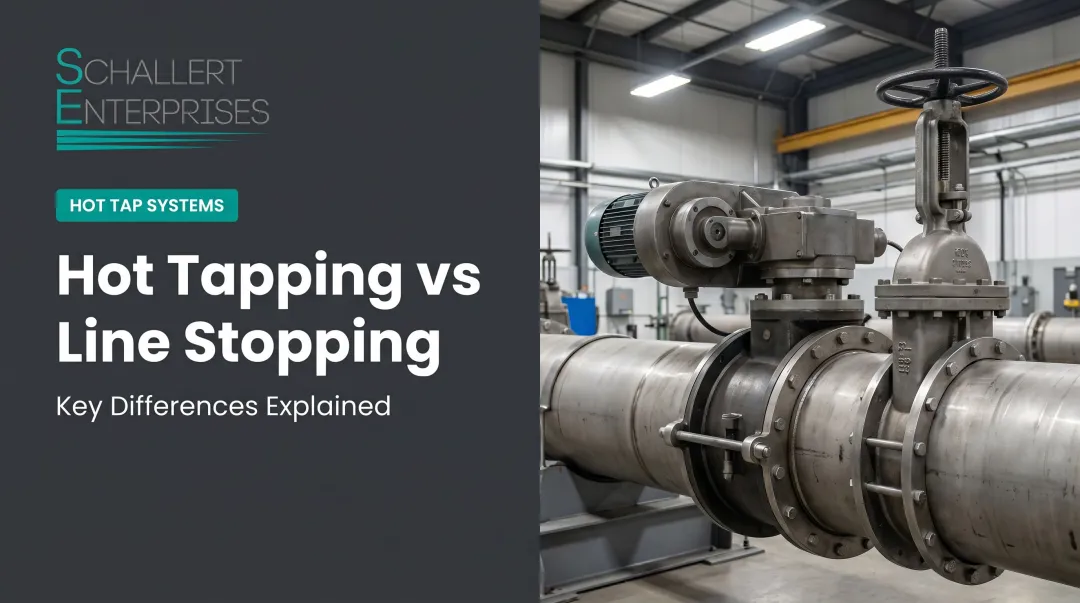
Hot tapping lets crews add branch connections without stopping flow. Cold tapping means depressurizing and isolating the section before any cutting starts. Both solve real problems, but picking the wrong one costs money, time, and safety margin. The stakes are real — a 36-inch pipeline at 1,000 psig can lose roughly $1.5 million during a four-day shutdown, according to an EPA Natural Gas STAR example.
This article breaks down how each method works, when contractors should reach for one over the other, and how equipment choice shapes the outcome.
Key Takeaways
- Hot tapping cuts a pressurized line without stopping flow; cold tapping shuts down and isolates the section first
- Hot tapping minimizes downtime but demands specialized machines, cutters, and trained operators
- Cold tapping suits corroded pipe, thin walls, or materials unrated for live cutting
- Pipe condition, service criticality, budget, and code requirements drive the final call
- Most contractors keep both toolsets on hand for flexibility across job types
Hot Tapping vs Cold Tapping: Quick Comparison
Here's how the two methods stack up across the factors that matter most on a job site:
| Factor | Hot Tapping | Cold Tapping |
|---|---|---|
| Cost | Higher equipment and labor investment upfront, but avoids shutdown-related revenue loss | Lower equipment cost, but adds expenses from service interruption, draining, and restart |
| Process | Drills/cuts into a pressurized, flowing line using a tapping machine and fitting | Line is shut down, depressurized, and isolated before cutting begins |
| Downtime | Zero to minimal service interruption | Planned downtime while the section drains and isolates |
| Best Use Case | New branch connections, valve installs, tie-ins on active mains | Sectional repairs/replacements or pipe conditions unsafe for live tapping |
The right pick almost never comes down to preference. It comes down to pipe condition, how critical the service is, and what the budget can absorb.
What Is Hot Tapping?
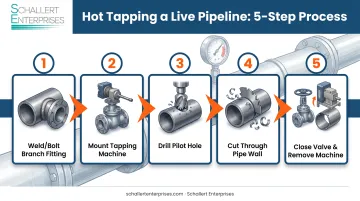
Hot tapping creates a branch connection or opening in a pipeline while the line stays pressurized and in service. A crew welds or bolts a branch fitting and valve onto the pipe, mounts a tapping machine on top, then drills and cuts through the pipe wall without stopping flow. Once the cut is complete, the valve closes and the machine comes off.
Core benefits include:
- Uninterrupted supply for customers downstream of the tap
- No product loss or venting during the cut
- No need to purge the line with inert gas before or after the job
- Tighter scheduling for contractors juggling multiple client timelines
Fittings vary by job. Full-encirclement tees wrap around the entire pipe circumference for larger branches, while weld-on saddles work well for smaller taps that don't need a full sleeve. Tap sizes range from fractional-inch service branches up to large-diameter mains.
Equipment sizing is a safety decision. A tapping machine, cutter, or pilot drill mismatched to the pipe material can turn a routine tap into an incident.
Schallert Enterprises builds tapping machines for taps from 3/4 inch through 72 inches, plus carbide, HSS, and diamond segment cutters for steel, cast iron, and concrete-lined pipe. Pilot drills with catch wires hold the cut-out coupon so it does not drop into the live line.
Use Cases of Hot Tapping
Hot tapping suits jobs that cannot take a service interruption:
- Emergency bypasses when a section needs isolation but supply must continue
- Plant expansions requiring new branch connections on active process lines
- New tie-ins on municipal water mains or gas distribution systems already carrying flow
The payoff shows up in avoided losses. EPA's Natural Gas STAR program documents that hot tapping removes the need for pipeline shutdown, atmospheric venting, and inert-gas purging. That cuts methane emissions and customer interruptions versus a traditional blowdown-and-purge. For contractors billing by the job, it means fewer stalled crews and faster turnaround.
What Is Cold Tapping?
Cold tapping means making a connection or modification on a pipeline that's already been shut down, depressurized, and isolated from the active system. The sequence runs opposite to hot tapping: isolate first, then cut, instead of cutting while flowing.
Core benefits include:
- Lower risk during the cut since there's no live pressure pushing back against the tool
- Compatibility with pipe conditions hot tap equipment can't handle, including thin walls and certain plastics
- A simpler procedure for crews without hot tap certification or specialized machines on hand
Some sources use "cold tapping" to describe freeze-plug isolation, where a section of pipe gets frozen solid to create a temporary plug. That's a different technique. For most pipeline contractors, cold tapping means tapping an isolated, depressurized section — not freezing a plug in place. Mixing up the two on a job site leads to confused scopes and mismatched equipment orders.
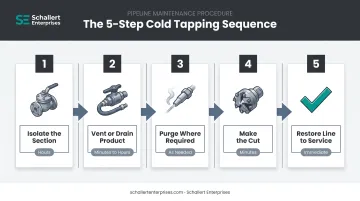
Cold tapping is typically slower and more labor-intensive than hot tapping. Each step adds hours, sometimes days, to the schedule:
- Isolate the section
- Vent or drain product
- Purge where required
- Make the cut
- Restore the line to service
Use Cases of Cold Tapping
Cold tapping fits best when pipe condition or project scope rules out live tapping:
- Sectional replacements where the surrounding pipe is already scheduled for removal
- Valve installs on deteriorated or corroded pipe that can't handle the vibration and stress of a hot tap machine
- Projects where available hot tap equipment isn't rated for the line's pressure class or material
API RP 2201 lays out a useful test: before hot tapping, contractors need essential service continuity, a documented procedure, and confirmation that a shutdown genuinely isn't practical. If those conditions can't be met, the standard directs crews toward a shutdown-based approach with standard lockout/tagout procedures instead.
That's a real trade-off. Planned shutdowns remove the hazards of cutting a pressurized pipe, but they add isolation, drainage, purging, and restart work that hot tapping skips entirely. For crews managing deteriorated distribution pipe, that trade-off often tips toward cold tapping despite the added downtime.
Hot Tapping vs Cold Tapping: Which Is Better for Your Project?
Neither method wins outright. The right call depends on four factors that show up on almost every job.
Decision Factors to Consider
- Pipe material and condition: Corroded or thin-walled sections may not withstand the pressure and vibration of hot tap equipment. Cold tapping removes that risk entirely.
- Service criticality: Lines that can't be shut down, such as municipal water mains or gas transmission mains, push contractors toward hot tapping by default.
- Budget and timeline: Weigh the cost of specialized machines and trained crews against the operational cost of a scheduled shutdown, drainage, and restart.
- Safety and code compliance: Standards like ASME B31.4, B31.8, and API RP 2201 govern which method is permitted for a given pipeline class.
None of these codes hand contractors a blanket yes or no. ASME B31.4, for example, limits welded fittings used to cover defects to NPS 3 and flags that hot-tap fittings over 2 inches may need full-encirclement reinforcement. Pipe condition, contents, pressure, and the job-specific isolation plan still drive the call every time.
Real-World Case Study
In 2018, a 20-inch natural gas liquids pipeline carrying ethane and propane was struck by a 125-ton trencher, sparking a fire. The mainline valve wasn't functioning, which ruled out a normal shutdown.
Crews built an external bypass, and T.D. Williamson's isolation team arrived on-site within 48 hours to perform a live-line stopple isolation roughly 150 feet from the fire.
That isolation let the damaged section get repaired and the line return to service within 88 hours of the initial strike, without a lengthy pipeline-wide shutdown. A cold-tap, full-shutdown approach on a live NGL transmission main wasn't realistic given the fire risk and product volume involved. Live isolation was the only path that kept the surrounding system running while crews fixed the damage.
Contractors handling frequent live-line work, whether emergency repairs or planned tie-ins, benefit from having durable equipment ready before the call comes in.
Schallert Enterprises manufactures tapping machines from 3/4 inch to 72 inches, folding head line stop assemblies from 5 inches to 84 inches, and the cutters, pilot drills, and jackscrews that connect the two systems. All are built in the USA so crews can handle either scenario without renting or scrambling for parts.
Conclusion
Hot tapping and cold tapping solve different problems, and neither wins the argument outright. Pipe condition, service criticality, budget, and code requirements all pull the decision in different directions depending on the job in front of you. That's why most established pipeline contractors keep both toolsets on hand rather than betting on one method for every project.
The equipment matters just as much as the method. A tapping machine sized wrong for the pipe, or a folding head rated below the line's actual pressure, turns a routine job into a costly redo or a safety incident. Correctly sized, reliable equipment protects crew safety, limits downtime, and lowers maintenance costs over the life of the pipeline. That holds whether the job calls for a live tap or a planned shutdown.
Schallert Enterprises builds USA-made hot tapping machines and line stop equipment for taps from 3/4 inch to 72 inches, so crews can match the tool to the line instead of forcing one setup onto every job.
Frequently Asked Questions
What is the main purpose of hot tapping?
Hot tapping lets contractors add branch connections, valves, or fittings to a live, pressurized pipeline without shutting down service or venting product. It keeps supply flowing to downstream customers during the work.
Is hot tapping cost-effective?
Equipment and skilled labor add upfront cost, but hot tapping usually saves money overall. It eliminates the revenue loss, product venting, and restart work tied to a planned shutdown.
Which side should the cold tap be on?
Place isolation upstream or downstream of the work area based on flow direction and nearby valve locations. Always follow a project-specific isolation plan.
What is the difference between hot tapping and line stopping?
Hot tapping creates a new connection on a live line. Line stopping uses that connection to insert a plugging head and temporarily halt flow so maintenance can happen downstream.
Can cold tapping be performed on any pipe material?
Cold tapping works well on materials unsuitable for live tapping, including compromised steel and certain plastics. The line is fully depressurized before any cutting starts.
How do contractors decide between hot tapping and cold tapping equipment?
The decision comes down to pipe condition, service criticality, project budget, and applicable safety codes. Many contractors keep both toolsets available since job requirements shift from one project to the next.